
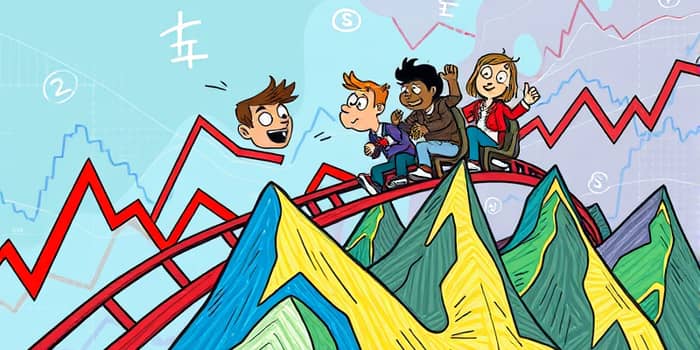
Markets ebb and flow in a rhythm that seems almost alive. Prices surge, optimism spreads, then fear strikes and values plunge. This cycle, repeated over decades, shapes not only financial outcomes but also the emotions of every participant.
In this article, we will delve into definitions, raw data, emotional patterns, and the behavioral biases that drive peaks and troughs. Finally, we will explore evidence-based strategies to help you navigate these turbulent waters.
Understanding Market Cycles and Their Numbers
A market cycle moves from peak to trough and back again. A peak is the highest level before a sustained decline, while a trough marks the lowest nadir before recovery. Corrections and bear markets represent meaningful drops, defined as 10–19.9% and at least 20% declines respectively.
These conventions allow clear discussion of highs and lows. Beyond definitions, historical data offers crucial perspective on the asymmetry between declines and recoveries.
Over the past 95 years, bearish phases lasted roughly 21.4 years in total, while markets rose about 78% of the time. This steeper yet shorter downturns versus longer, larger advances pattern shapes investor psychology in profound ways.
The Emotional Journey of Investors
Psychologists describe an eight-stage emotional cycle that mirrors market behavior. Each phase corresponds to particular sentiment and actions.
- Optimism – Investors cautiously deploy capital as prices begin to climb.
- Excitement – Early wins fuel confidence and increased commitments.
- Euphoria – Overconfidence peaks; valuations often detach from fundamentals.
- Anxiety – Growth stalls; doubts emerge, but many hold on, hoping for a rebound.
- Fear – Losses accelerate; selling intensifies as survival instincts kick in.
- Despair – The emotional trough; regret and frustration dominate.
- Hope & Recovery – Renewed faith as markets begin to recover, completing the cycle.
Market peaks align with euphoria and anxiety, while troughs correspond to fear and despair. Recognizing these patterns can help investors avoid emotional overreactions at critical turning points.
Key Behavioral Biases at Peaks and Troughs
Behavioral scientists have identified several biases that amplify market extremes.
- Loss aversion: Pain from losses outweighs joy from gains, often by a factor of two. This drives reluctance to sell losing positions and panic selling when losses become unbearable.
- Herding: Mimetic behavior leads many to follow the crowd into popular trades during peaks, and to dump positions en masse during troughs.
- Overconfidence: After sustained gains, investors overestimate their ability to predict tops and bottoms, increasing leverage and risk.
- Recency bias: Recent performance is erroneously projected forward, fueling exaggerated bullishness at highs and undue pessimism at lows.
These biases operate in concert, creating feedback loops that drive prices away from fundamental value, then back again as sentiment reverses.
How Biases Shape Real-World Outcomes
At market peaks, overconfidence leads to reckless leverage. Margin debt swells, speculative schemes proliferate, and valuations detach from earnings. Investors believe this time is different, blinding them to mounting risk.
Conversely, at troughs, loss aversion triggers wholesale capitulation. News headlines amplify fear, and zoomed-in focus on short-term pain obscures the potential for recovery. Ironically, selling at the bottom often occurs when expected future returns are historically attractive.
John Hussman emphasizes the importance of measuring returns peak-to-peak over multiple cycles. At the top of a bull market, gains measured from the prior trough look exceptional, tempting investors to extrapolate them indefinitely. At a trough, peak-to-trough losses appear devastating, inducing selling when valuations are at favorable levels.
Strategies to Manage Market Psychology
Evidence suggests that structured approaches can mitigate the worst behavioral pitfalls.
- Systematic rebalancing: Maintaining target asset allocations forces selling into strength and buying into weakness, countering both euphoria and panic.
- Predefined entry and exit rules: Setting price or valuation thresholds in advance removes emotion from trade decisions.
- Dollar-cost averaging: Regular contributions smooth purchase prices across cycles, reducing impact of timing mistakes.
Advisors can further support clients by reframing market downturns as opportunities for disciplined investors rather than disasters. Sharing historical statistics—such as the rarity of significant losses over five-year periods following all-time highs—can help counteract the instinctive fear at peaks.
Conclusion: Harnessing Psychology for Better Outcomes
Market peaks and troughs are inevitable, but emotional overreactions do not have to be. By understanding the mechanics of cycles, recognizing the emotional journey, and acting to counteract biases, investors and advisors can transform volatility into opportunity.
Remember that corrections and bear markets, though painful, tend to be shorter and steeper than the recoveries that follow. Adhering to evidence-based strategies such as rebalancing, systematic rules, and cost averaging can help you stay the course.
Ultimately, mastering the psychology of market cycles means replacing panic with perspective, emotion with process, and regret with resilience. That mindset shift can turn peaks and troughs from pitfalls into stepping stones on the path to long-term success.
References
- https://in.snhu.edu/blogs/understanding-psychology-of-financial-markets
- https://www.bajajamc.com/knowledge-centre/investor-emotions-behavioral-finance-market-cycles
- https://www.mawer.com/tools-and-resources/investor-education/fear-of-market-highs-a-guide-to-investing-during-market-peaks
- https://www.privatebanking.societegenerale.com/en/insights/volatility-the-markets-the-golden-rules-from-behavioral-finance/
- https://www.hussmanfunds.com/html/peak2pk.htm
- https://www.morganstanley.com/articles/behavioral-finance
- https://www.rbcgam.com/en/ca/learn-plan/investment-basics/investing-at-all-time-highs/detail
- https://savantwealth.com/savant-views-news/the-influence-of-behavioral-finance-and-the-market/
- https://www.hartfordfunds.com/practice-management/client-conversations/managing-volatility/bear-markets.html
- https://www.gsb.stanford.edu/insights/where-stock-market-psychology-pricing-intersect
- https://porterinv.com/our-thoughts/what-you-need-to-know-about-the-psychology-of-a-market-cycle/
- https://www.worldfinance.com/markets/unpicking-the-psychology-that-continues-to-drive-stock-market-trends
- https://towerpointwealth.com/the-psychology-of-market-cycles/