
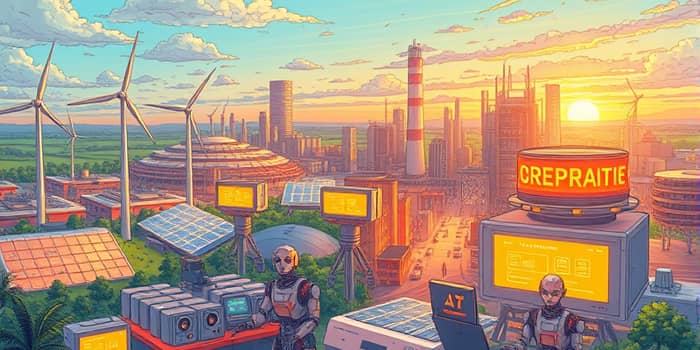
In an era defined by rapid change and boundless possibility, the nature of work is undergoing its most dramatic transformation since the Industrial Revolution. Investors and professionals alike must learn to navigate a landscape where technology, sustainability, and human capital blend in unprecedented ways.
The convergence of powerful macro forces—ranging from automation and AI to demographic shifts and the green transition—offers both challenges and opportunities. This article explores the trends reshaping work, highlights the skills required to thrive, and identifies the emerging industries where future growth and impact will flourish.
Macro Forces Shaping the Future of Work
At the heart of the transformation are six interlocking dynamics that will define labor markets and investment priorities through 2030 and beyond. Understanding these drivers equips stakeholders to anticipate change and capitalize on new value creation.
- Automation & AI redefining routine and white-collar tasks
- Digital platforms enabling virtual labor mobility
- Additive manufacturing and reshoring strategies
- Demographic shifts fueling multigenerational workforces
- Green transition and climate policy priorities
- Geopolitical fragmentation shaping investment flows
Advanced robotics, natural language processing, and predictive algorithms are pushing automation into complex domains—from legal document review to financial analysis. Companies widely adopt online marketplaces and collaboration tools, creating new opportunities for skilled workers abroad while intensifying competition in advanced economies.
Population aging in many advanced nations and youth bulges in emerging markets are reorienting consumer behavior and workplace expectations. Today’s multigenerational teams demand flexibility, purpose, and a commitment to fairness, inclusion, and well-being. Simultaneously, global climate goals spur investment in renewable energy and clean technologies, reallocating labor across sectors and regions.
Future of Jobs: Displacement, Creation & Skills
By 2030, roughly 22% of existing roles could change significantly, with around 34% of tasks fully automated. This evolution means that approximately 60% of the current workforce will require intensive reskilling and upskilling initiatives to remain competitive.
Organizations are shifting to a skills-first workforce management model. Over 55% of employers have already prioritized skills over job titles, and another 23% plan to do so within a year. Professionals and investors should focus on cultivating portable, future-proof skills and adaptability rather than resting on static credentials.
High-demand skills now combine technical expertise with uniquely human capabilities, including:
- Analytical thinking and complex problem-solving
- Tech literacy in AI, big data, and cloud computing
- Creativity, emotional intelligence, and collaboration
- Self-management skills like resilience and active learning
New roles are emerging in line with global priorities. U.S. labor projections through 2032 highlight wind turbine service technicians, solar photovoltaic installers, nurse practitioners, data scientists, and information security analysts as the fastest-growing occupations. These fields underscore the structural expansion of renewable energy, healthcare, cybersecurity, and the data economy.
Emerging Industries & Growth Sectors to Watch
For investors seeking both financial return and social impact, the following sectors represent the nexus of innovation, sustainability, and demographic need:
Global investment in AI is projected to hit $500 billion by 2026, fueling demand for AI enablers and adopters across manufacturing, finance, healthcare, and public services. Hyperscale data centers and energy-efficient infrastructure will underpin this growth, meeting the needs of data-hungry applications.
Renewable energy remains central to decarbonization efforts, with wind, solar, and green hydrogen projects attracting both public and private capital. Advanced manufacturing techniques such as 3D printing further drive efficiency and supply-chain resilience, amplifying the value of specialized technical roles.
Healthcare and biotech innovations—from telemedicine platforms to gene-editing therapies—address the demands of aging populations and rising health expectations. These fields promise both societal benefit and robust returns as personalized, accessible care becomes the norm.
Securing digital infrastructure against cyber threats is a top priority for organizations worldwide. Higher data volumes, stricter compliance regimes, and evolving threat landscapes are spurring continuous investment in network architecture, cloud security, and endpoint protection.
Charting a Path Forward
Success in the future economy demands a dual focus: backing transformative technologies and investing in human capital. Financial returns and social impact reinforce each other when capital supports training, reskilling programs, and inclusive workplace cultures.
Professionals can future-proof their careers by:
- Embracing lifelong learning to master emerging technologies
- Building cross-disciplinary expertise, from coding to creative problem-solving
- Leveraging flexible work models and virtual collaboration tools
- Cultivating a personal brand around specialized knowledge
Policymakers and educators must modernize curricula, foster public–private partnerships for workforce development, and explore safety nets such as portable benefits and wage insurance. A collaborative approach across sectors will ensure a just and resilient transition.
Ultimately, human–AI collaboration in everyday workflows will define productivity and innovation in the decades ahead. By identifying the most promising industries, nurturing adaptable talent, and championing sustainable practices, we can create an inclusive economy where opportunity and purpose intersect.
The time to act is now. Whether you are an investor scouting new frontiers or a professional charting your next move, strategic foresight and adaptability will shape success in the future of work. Embrace the transformation, invest in emerging industries, and help build a world where innovation and well-being thrive together.
References
- https://www.morganstanley.com/insights/articles/investment-outlook-shaping-markets-2026
- https://blog.workday.com/en-us/future-workforce-we-see.html
- https://gedeth.com/es/blog/2025/12/10/the-5-sectors-that-will-shape-global-growth-in-2026/
- https://www.mckinsey.com/featured-insights/future-of-work
- https://www.synovus.com/corporate/insights/market-industry-insights/top-american-industries-2026/
- https://www.brookings.edu/events/how-will-emerging-technologies-affect-the-future-of-work/
- https://www.youtube.com/watch?v=LyAEHXBiyQY
- https://www.weforum.org/publications/the-future-of-jobs-report-2025/
- https://unctad.org/publication/global-investment-trends-monitor-no-50
- https://www.bls.gov/ooh/fastest-growing.htm
- https://knowledge.uli.org/en/reports/emerging-trends/2026/emerging-trends-in-real-estate-united-states-and-canada-2026
- https://www.indeed.com/career-advice/finding-a-job/top-growing-industries
- https://www.ibisworld.com/united-states/industry-trends/fastest-growing-industries/