
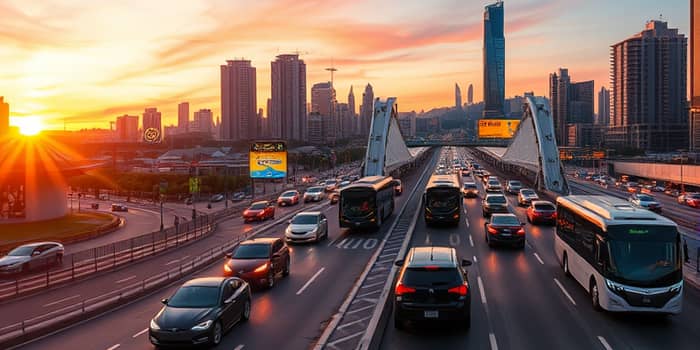
In an era where data, AI, and connectivity converge, the transportation sector stands on the brink of unparalleled transformation. Investors and innovators alike are witnessing an ecosystem that will redefine how people and goods move across cities, continents, and even air corridors. This is not a distant vision; it is an unfolding reality driven by breakthroughs in electric vehicles, autonomous systems, and networked infrastructure.
As urban landscapes swell and environmental concerns intensify, the demand for smarter, cleaner, and more efficient mobility solutions has never been greater. From bustling metropolises to emerging economies, stakeholders are mobilizing resources to navigate this complex terrain and unlock value—both financial and societal. The following exploration delves into the forces shaping this revolution, the promising technologies at its core, and how you can position yourself at the forefront of this new mobility frontier.
Market Dynamics and Growth Projections
Today’s transportation technology market reflects a narrative of explosive opportunity. Valued at USD 217.10 billion in 2025, it is set to surge to USD 1,288.53 billion by 2033, fueled by a growing at a CAGR of 25.1% that outpaces virtually every other industrial segment. This record-setting compound annual growth rate speaks to the intense pace of innovation, from electric vehicle rollouts to advanced driver assistance systems (ADAS) that enhance safety and efficiency.
In the United States alone, a market of approximately USD 35 billion as of 2024 is rapidly evolving. With more than over 61,000 public EV charging stations and integration of AI/IoT platforms predicted to create a USD 200 billion ecosystem, the groundwork is laid for a green and connected transport grid. Autonomous driving, in particular, is projected to generate USD 300–400 billion in revenue by 2035, marking a new era of nearly limitless potential.
Key Technological Innovations
The mobility revolution hinges on an array of groundbreaking technologies, each contributing to a cohesive, smarter network:
- Autonomous Vehicles (AVs): Robotaxis, self-driving shuttles, and heavy-duty autonomous trucks are moving from pilot projects to real-world deployment. Waymo, for example, operates over 2,500 robotaxis across ten U.S. cities, delivering 450,000 paid rides per week and paving the way for scalable on-demand mobility.
- AI and Machine Learning: These engines power traffic optimization, predictive maintenance, dynamic routing, and generative solutions for transit communications—such as Singapore’s sign language translators and AI chatbots ensuring inclusive services.
- Connectivity and IoT: Vehicle-to-everything (V2X) communication and telematics enable real-time traffic management, emergency preemption, and inter-vehicle coordination. Atlanta’s upcoming Cellular C-V2X rollout promises faster alerts and safer intersections.
- Electric Vehicles and Sustainability: Driven by government incentives and stricter emissions standards, EV adoption is accelerating. Logistics and freight providers are electrifying fleets to reduce carbon footprints and operating costs.
- Mobility-as-a-Service (MaaS): Comprehensive ecosystems emerging by 2024 integrate ride-sharing, micro-mobility, public transit, and last-mile logistics into unified platforms, simplifying access and payment.
- Smart Infrastructure: Adaptive traffic signals, digital rail signaling, and sensor-enabled roads create responsive networks that reduce congestion and enhance resilience.
Investment Opportunities and Regional Highlights
For investors seeking to tap into this momentum, a clear picture of regional opportunities and funding trends is essential. Public-private partnerships, combined with targeted government programs, are fueling the modernization of roads, rails, ports, and digital frameworks.
Leading efforts include the U.S. Infrastructure Investment and Jobs Act, Europe’s TEN-T cross-border transport corridors, and ambitious rail extensions across Asia. These programs are not only expanding capacity but embedding intelligence into every layer of the network.
Urban Mobility Readiness rankings highlight San Francisco, Singapore, and Helsinki as leaders in the adoption of green energy solutions, autonomous systems, and adaptive transit networks. This underscores the importance of innovation-friendly policies and infrastructure readiness as catalysts for growth.
Navigating Challenges and Policy Considerations
Despite clear momentum, several critical challenges demand attention. Ensuring cybersecurity across converged IT/OT systems is paramount; malicious actors could disrupt networks or compromise passenger safety. Regulatory frameworks must evolve to accommodate AVs, V2X deployments, and data sharing while fostering competition.
Equity and sustainability objectives must guide investment, ensuring that high-speed, high-tech solutions do not leave underserved communities behind. Expanding affordable mass transit remains essential, alongside managed lanes and congestion pricing to optimize urban flow.
Diversifying funding sources—from municipal bonds to innovation grants—will be crucial for sustained modernization. Stakeholders must collaborate across public, private, and academic sectors to align on standards, share data, and co-develop solutions that scale effectively.
Looking Ahead: A Vision for 2035
As we approach 2033, we anticipate an environment where digitalization and sustainability converge seamlessly. Urban metro systems will operate with predictive maintenance, zero-emission buses will dominate city streets, and autonomous logistics corridors will streamline global supply chains.
By 2035, autonomous driving alone could unlock USD 300–400 billion in annual revenue, while holistic, data-driven mobility ecosystems improve safety, reduce emissions, and elevate quality of life. This journey will require bold investments, unwavering collaboration, and a shared commitment to innovation.
For investors, the message is clear: the future of mobility lies in embracing transformational technologies today. Align your strategies with the trends outlined here, and you position yourself not just as a beneficiary of change but as a catalyst for a smarter, greener, and more connected world.
References
- https://www.perif.ai/blog-posts/the-future-of-mobility-innovations-shaping-tomorrows-transportation
- https://www.transportadvancement.com/featured/the-evolving-and-executable-transportation-trends-in-2025/
- https://www.weforum.org/stories/2025/03/cities-urban-transport-mobility-technology/
- https://www.grandviewresearch.com/industry-analysis/transportation-technology-market-report
- https://meadhunt.com/6-trends-transportation-2026/
- https://www.kenresearch.com/usa-transportation-technology-market
- https://www.tomorrow.city/future-mobility-the-innovations-that-will-stick/
- https://www.hdrinc.com/insights/top-5-technology-trends-us-transportation
- https://www.youtube.com/watch?v=-jlSqeP_ydk
- https://www.deloitte.com/us/en/insights/industry/government-public-sector-services/transportation-trends.html
- https://www.wipo.int/web-publications/wipo-technology-trends-future-of-transportation/en/5-emerging-technologies-in-transportation.html
- https://www.paiseec.com/blogs/knowledge/modern-mobility-the-future-of-transportation-innovation-and-smart-travel
- https://www.deloitte.com/us/en/insights/topics/future-of-mobility.html