
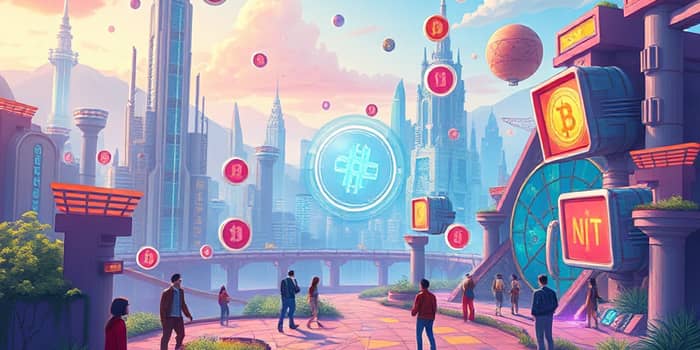
As blockchain matures, NFTs evolve from speculative collectibles into foundational elements of virtual worlds and digital ownership. This article explores how non-fungible tokens and the metaverse intersect to reshape identity, economies, and real-world integration.
The Evolution of NFTs and Metaverse Integration
Over the past five years, the NFT space has transformed profoundly. No longer confined to digital art speculation, these tokens serve as critical components within emerging virtual-reality platforms. From transparent ledgers verifying ownership to programmable smart contracts unlocking new services, NFTs underpin a burgeoning utility-centric digital asset era.
Simultaneously, metaverse environments have expanded beyond simple social hubs into immersive economic zones. Virtual real estate, interactive architecture, and commercial districts now host brands, communities, and institutions, all linked by blockchain registries that enforce ownership and governance.
Key Growth Drivers and Trends
Several structural shifts are propelling NFTs and metaverse applications forward. Developers, enterprises, and communities are converging around core innovations that will define the next decade.
- Utility-Based Assets: Tokens grant functional access—membership passes, service keys, and rights to participate in protocols.
- Digital Identity and Soulbound Tokens: Adoption of blockchain-based decentralized identity solutions for verifiable credentials spanning academic, professional, and personal data.
- Web3 Gaming Ecosystems: Emergence of thriving player-owned economies model where in-game assets move across platforms and marketplaces.
- Layer-2 Scaling and zk-Rollups: Reduced fees and faster transactions unlock high-frequency NFT interactions for a global audience.
- Virtual Real Estate and Land Sales: Complex metaverse projects are now revenue-generating, with plot leasing, advertising space, and architecture sales.
- Cross-Chain Interoperability: Developing a seamless, cross-platform interoperability layer to allow assets to traverse networks without friction.
Real-World Applications Beyond Art and Gaming
The intrinsic versatility of NFTs extends into diverse sectors. Rather than remaining digital curiosities, tokens now streamline processes in industries ranging from healthcare to logistics.
- Event Ticketing and Access Management: Secure, non-fungible passes guarantee authenticity and eliminate fraud.
- Supply Chain Traceability: Tokenization of physical goods creates tamper-proof provenance records.
- Health Records and Identity: Immutable medical histories and consent frameworks enhance privacy and interoperability.
- Property and Asset Ownership: Virtual deeds and titles enforce virtual property rights management in metaverse and real estate contexts.
- Financial Services and Collateralization: NFTs serve as collateral for loans, establishing new credit models.
- Loyalty Programs and Exclusive Communities: Membership tokens unlock events, content, and networking opportunities.
Institutional Adoption and Market Integration
Following a period of speculative correction, major corporations and financial institutions have embraced NFT frameworks. Enterprises now deploy robust, institutional-grade infrastructure development to manage digital assets, ensuring regulatory compliance and operational resilience.
Global brands integrate NFTs into CRM strategies, offering limited-edition drops and token-gated experiences. These programs deepen customer engagement and build long-term loyalty by granting holders governance rights, revenue shares, or referral incentives tied to token ownership.
Platform Distribution and Top Collections
Blockchain networks specialize in different uses. While Ethereum remains the go-to for high-value collectibles, alternative chains optimize for speed, cost, or specific ecosystems.
Leading collections such as Bored Ape Yacht Club and CryptoPunks have pivoted toward metaverse access, virtual merchandise lines, and multimedia franchises. Meanwhile, projects like Doginal Dogs demonstrate community resilience, surging in volume even amid broader market contractions.
Investor Considerations and Valuation Metrics
As the market stabilizes, discerning investors distinguish between fungible utility tokens and unique non-fungible assets. Key valuation metrics now emphasize ecosystem integration, functional utility, and rare asset supply rather than pure social signaling.
Emerging frameworks measure factors such as on-chain activity, cross-platform adoption rates, and programmable rights execution. This shift moves beyond the programmable digital rights management narrative to assess tangible economic contributions and long-term sustainability.
Integration with the Real Economy
Blockchain firms and data-center operators are bridging digital asset infrastructures with traditional industries. High-performance computing facilities support both AI workloads and decentralized networks, illustrating the financializing digital assets process underway in global markets.
Enterprises like Core Scientific and Applied Digital exemplify this trend, deploying scalable computing resources that host blockchain validation, data analytics, and decentralized storage—all under unified governance structures that serve corporate and public sector clients.
Looking Ahead: The Future of Digital Assets
As NFTs mature, they will become the universal containers for intellectual property, royalty streams, identity credentials, and legal contracts. This convergence heralds a new age where digital tokens underpin everything from academic degrees to architectural blueprints.
By weaving programmable digital rights management into every transaction and fostering seamless cross-platform interoperability layer, the ecosystem will empower individuals to own, trade, and monetize their identities and assets like never before.
In the coming years, expect deeper institutional partnerships, refined regulatory frameworks, and mass adoption of tokenized services, ultimately ensuring that the metaverse and NFTs transcend niche markets to become integral to our daily lives.
References
- https://www.marmoremena.com/en/insights/nfts-beyond-the-metaverse/
- https://www.bydfi.com/en/cointalk/nft-market-development-trends
- https://www.youtube.com/watch?v=dks9fKeaTLs
- https://www.tradingkey.com/analysis/cryptocurrencies/more/261582748-nft-donald-trump-pfp-doodle-bored-ape-price-tradingkey
- https://mudrex.com/learn/nfts-in-metaverse-role-explained/
- https://www.mexc.com/news/995460
- https://www.blockchain-council.org/cryptocurrency/can-nfts-move-beyond-digital-art/
- https://nftplazas.com/best-nfts-to-buy/
- https://www.citigroup.com/global/insights/digital-assets-nfts-metaverse-and-money
- https://www.vaneck.com/us/en/blogs/digital-assets/investing-in-digital-assets-without-full-crypto-exposure/
- https://www.pwc.com/us/en/tech-effect/emerging-tech/understanding-cryptocurrency-digital-assets.html
- https://wearebrain.com/blog/what-happened-to-nfts-and-the-metaverse/