
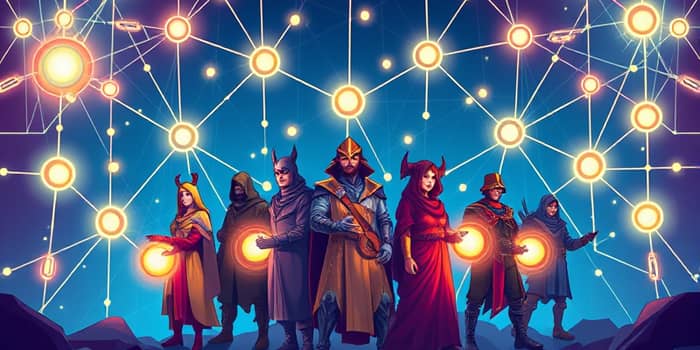
In the evolving world of blockchain, validators stand as sentinels ensuring trust, security, and freedom. Their work replaces centralized intermediaries and fuels a new era of financial and data sovereignty.
Understanding Validators: The Pillars of Blockchain Security
A validator is a node that verifies transactions and proposes or signs new blocks to be added to the chain. These entities enforce consensus rules, maintain integrity, and uphold the network’s resilience.
Validators act as gatekeepers of the network’s security and integrity by examining digital signatures, ensuring protocol compliance, and preventing double-spending. They collectively replace traditional intermediaries like banks and card processors, performing transaction verification in a fully decentralized way.
Why Validators Matter for Decentralization
The strength of decentralized networks lies in their diversity and distribution. When validation power is spread among many independent entities, the system gains distributed power and censorship resistance.
- Distributed power limits control by any single entity.
- Censorship resistance ensures valid transactions cannot be blocked unilaterally.
- Resilience against outages, attacks, and regional pressure.
For example, Ethereum 2.0 boasts over 1,077,000 active validators as of 2024, illustrating massive redundancy and a high barrier against capture.
Responsibilities of Validators
Validators carry core duties that keep blockchains running seamlessly. Their tasks include:
- Transaction validation based on digital signatures and balance checks.
- Block proposal and aggregation of valid transactions.
- Maintaining consensus and finalizing the canonical chain.
In Proof of Stake systems, validators lock tokens as collateral. They propose or attest to blocks based on stake-weighted randomness and face slashing for misbehavior. In BFT variants, they exchange signed messages to tolerate faulty participants and still reach agreement.
Securing the Network: Tools and Incentives
Validators harness advanced cryptography to protect transaction integrity. Digital signatures verify authorization, cryptographic hash functions link blocks immutably, and Merkle trees enable efficient proof of inclusion. These tools combine to make tampering detectable and trustless validation possible.
Economic incentives align validator behavior with network health. Honest participation is rewarded with newly minted tokens and transaction fees, while misbehavior can trigger slashing penalties. Uptime and responsiveness are critical:
- Rewards for accurate and timely block proposals.
- Penalties for downtime or conflicting signatures.
- Encouragement for high performance and reliability.
This game-theoretic design aligns validators with the security objectives of the blockchain, ensuring long-term stability.
Validator Diversity: The Heartbeat of Resilient Networks
True decentralization demands diversity. When validators are geographically and socially dispersed, no single jurisdiction can exert undue influence. Multiple client implementations and varied infrastructure providers guard against correlated failures.
Stake distribution plays a key role: a concentration of tokens in a few large validators increases risk of collusion or manipulation. To foster healthy participation, networks adopt measures such as lower staking thresholds, delegation mechanisms, and liquid staking solutions, enabling more small and medium validators to join.
Comparing Validators with Traditional Intermediaries
In conventional finance, banks and clearinghouses validate, record, and sometimes reverse transactions. They hold central authority and can censor or block payments.
By eliminating centralized intermediaries, validators deliver a public, transparent ledger that reduces costs, accelerates settlement, and empowers users.
The Journey of a Transaction
Every transaction begins with a user signing and broadcasting it to the network. It enters a pool of unconfirmed transactions—waiting for a validator to include it in the next block.
In Proof of Stake, one validator is chosen at random (weighted by stake) to propose the block. They collect valid transactions, respect gas or fee rules, and publish the block. Other validators then verify each transaction’s correctness and sign off, extending the canonical chain.
Embracing the Future of Decentralization
Validators are more than technical operators; they are the champions of a new paradigm where power is distributed, trust is algorithmic, and participation is open. Each node strengthens the network’s resilience, promotes freedom of transaction, and safeguards data integrity.
As blockchain ecosystems evolve, the call to action is clear: support validator diversity, advocate for fair staking practices, and consider running your own node. Together, validators and users will shape a more transparent, resilient, and inclusive digital world.
References
- https://www.risein.com/blog/understanding-validators-in-blockchain
- https://www.staderlabs.com/blogs/staking-basics/what-is-a-validator/
- https://stakely.io/blog/validator-role-in-the-consensus-layer-and-blockchain-infrastructure
- https://securiti.ai/glossary/validator-function/
- https://www.zeebu.com/blog/role-of-validators-in-blockchain
- https://www.getreskilled.com/what-is-a-validation-engineer/
- https://www.chiliz.com/validator-in-blockchain/
- https://forum.cosmos.network/t/role-of-a-validator/9152
- https://everstake.one/resources/blog/crypto-validators-explained-the-core-of-proof-of-stake-networks
- https://www.youtube.com/watch?v=riVg_Up_fCg
- https://shardeum.org/blog/blockchain-validator/
- http://www.learngxp.com/csv-intermediate/the-roles-and-responsibilities-your-validation-program-needs-video/
- https://www.houstontamilchair.org/the-role-of-validators-in-securing-blockchain-networks/