
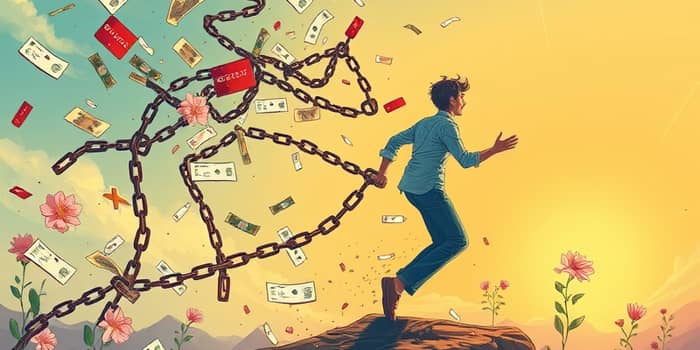
Debt is more than a financial burden—it’s a profound psychological challenge. Understanding its emotional, cognitive, and behavioral roots is the first step toward true freedom.
The Emotional Landscape of Debt
For many, debt is a chronic stressor affecting millions worldwide. Studies reveal that persistent debt contributes to higher rates of stress, anxiety, and depression.
Physical symptoms such as insomnia, headaches, and impaired concentration often accompany the mental toll of debt. These manifestations highlight that money troubles spill into every facet of life, undermining overall well-being.
People in debt describe an emotional roller coaster of hope and despair. They cycle through fear when bills arrive, shame in hiding balances, guilt over spending decisions, and fleeting relief when payments are made. This cycle of negative emotions can trap individuals in avoidance behaviors and deepen financial distress.
Cognitive and Behavioral Drivers
Why do rational individuals fall into debt traps? Behavioral science points to several mental shortcuts and biases:
- Present bias: valuing immediate gratification over long-term gains leads to delayed repayment.
- Loss aversion: feeling the pain of parting with money more intensely than the pleasure of debt reduction.
- Sunk cost fallacy: throwing good money after bad because prior spending feels irrecoverable.
- Confirmation bias: seeking reassurance that “debt is normal,” while dismissing warning signs.
Compulsive borrowing, sometimes termed debt addiction, resembles substance addiction in its cycle of craving and temporary relief. Credit cards and “buy now, pay later” schemes exploit impulsive drives and the brain’s reward centers, particularly the nucleus accumbens, to reinforce overspending.
Anatomy of the Debt Cycle
The debt cycle, or debt spiral, unfolds in predictable stages that lock borrowers into continuous borrowing:
Imagine a young professional who uses a credit card for an unexpected medical bill. As interest compounds, they make only minimum payments, fall behind, and open another card. Each step deepens their financial hole and heightens psychological strain.
Specific Psychological Drivers of Debt
Several intertwined factors drive people deeper into debt:
- Instant gratification: credit disconnects enjoyment from payment, encouraging overspending.
- Social comparison: FOMO and peer pressure inflame desires to match lifestyles showcased on social media.
- Emotional regulation through spending: retail therapy offers fleeting relief from stress and sadness.
- Denial and avoidance: ignoring statements and bills delays effective intervention.
- Low financial literacy: misunderstanding interest, compounding, and minimum payments breeds unrealistic optimism.
These drivers combine to create a powerful push-pull effect: immediate pleasure versus long-term pain, social validation versus financial health. Recognizing these forces is crucial for regaining control.
Breaking Free: Strategies for Recovery
Escaping the debt cycle requires both practical steps and psychological shifts. A holistic approach addresses mindset, behavior, and environment.
- Develop a realistic budget: track income and expenses to reveal spending patterns and set clear targets for debt reduction.
- Use debt repayment methods: the snowball method (smallest balance first) or avalanche method (highest interest first) provides structure and motivation.
- Automate payments: eliminate avoidance by scheduling automatic transfers toward debt.
- Build an emergency fund: even a small cushion prevents future borrowing for unexpected costs.
- Seek support: financial counseling, peer groups, or accountability partners combat isolation and shame.
Psychologically, cultivating self-compassion and realistic optimism can transform negative self-talk into actionable determination. Reframing debt repayment as an investment in personal freedom reframes the journey from punishment to empowerment.
Rebuilding Identity and Relationships
Debt often erodes self-worth, replacing confidence with feelings of failure. To rebuild identity:
First, celebrate small victories. Paying off a single credit card, reducing a balance by 10%, or resisting impulsive purchases are milestones worth acknowledging. Each victory strengthens a positive self-image and fuels sustained progress.
Second, open communication with partners and family. Financial transparency dissolves tension, fosters teamwork, and prevents financial infidelity. Establish shared goals—saving for education, vacations, or retirement—to align values and rebuild trust.
Transforming Life Outcomes
Debt influences major life decisions, from marriage timing to career choices. By breaking free:
• Individuals regain agency to pursue goals without monetary constraints.
• Couples strengthen bonds through collaborative financial planning.
• Families benefit from reduced stress and improved parenting quality.
Embracing financial responsibility and psychological resilience paves the way for lasting well-being and personal fulfillment.
Conclusion
Debt is a multifaceted challenge, woven from emotional, cognitive, and social threads. Yet, understanding its psychology unlocks powerful strategies for escape and transformation. By recognizing biases, restructuring behaviors, and fostering supportive relationships, individuals can dismantle the cycle of borrowing and build a foundation of freedom, confidence, and lasting peace.
References
- https://www.nationaldebtrelief.com/blog/financial-wellness/credit-score/the-psychology-of-debt-understanding-emotional-triggers-debt-addiction-and-financial-health/
- https://www.granite.org/financial-news-tips/breaking-the-debt-cycle-a-path-to-financial-freedom
- https://www.moneyfit.org/psychology-of-debt-understanding-emotional-drivers/
- https://guardianlit.com/the-debt-cycle-heres-how-to-break-it/
- https://www.advancedcb.com/post/the-psychology-of-debt-understanding-the-debtors-mindset
- https://www.achieve.com/learn/debt-basics/debt-cycle
- https://www.debt.org/blog/researchers-study-debt-psychology/
- https://kudzumoney.com/blog/escape-debt-cycle/
- https://cms.illinois.gov/benefits/stateemployee/bewell/financialwellness/financial-wellness-april21.html
- https://playerstrust.com/tips/how-to-break-the-cycle-of-debt
- https://www.youtube.com/watch?v=2xzhIrSnPP0
- https://www.youtube.com/shorts/r0WJ0DRQlGg
- https://homewoodhealthcentre.com/articles/the-psychology-of-debt/
- https://www.sunnydayfund.com/blog/breaking-the-debt-cycle-empowering-employees-with-healthier-financial-choices
- https://www.behavioraleconomics.com/the-psychology-of-debt-collection/