
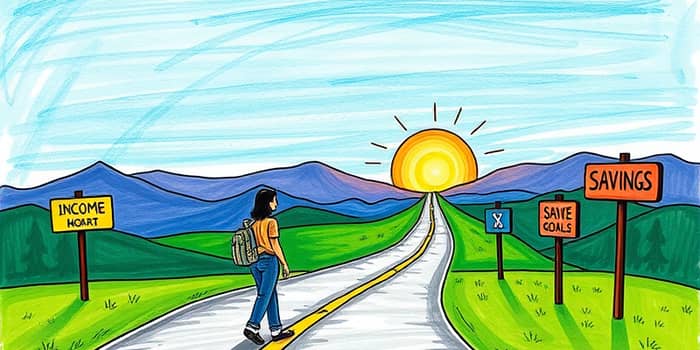
Imagine setting out on a cross-country journey without a map, destination, or plan. You might wander aimlessly, run out of fuel, or miss the sights that matter most. Your finances deserve no less guidance. A budget is your compass and your map, guiding every decision from day-to-day purchases to big milestones like owning a home or retiring early. It transforms uncertainty into direction, stress into stability, and guesswork into strategy.
In this article, you will discover how a budget serves as a practical guide to align spending, saving, and debt management with your deepest aspirations. You’ll learn what a budget really is, why it matters, what goes into one, and exactly how to build it. By the end, you’ll be ready to take the wheel of your financial journey with confidence.
Budget as Your Personalized Roadmap
At its essence, a budget is a spending plan—a tool to navigate the twists and turns of financial life. Think of it as a GPS that constantly updates based on traffic (income), roadblocks (unexpected expenses), and detours (big purchases). Without one, you’re reactive: expenses creep up unnoticed and goals slip away. With a budget, you enjoy proactive, strategic management of your finances, steering toward a clear destination.
To build your roadmap, ask three simple questions:
- Where are you now? (Assess your income, assets, debts, and spending habits.)
- Where do you want to go? (Define short-, medium-, and long-term goals—SMART goals that are Specific, Measurable, Achievable, Relevant, and Time-bound.)
- How will you get there? (Decide on a savings rate, debt-repayment strategy, and investment plan.)
Answering these sets the stage for every financial choice you make, from buying a coffee to choosing a retirement account.
What Is a Budget?
In simple terms, a budget is a written plan for how you will allocate your income, expenses, and savings over a set period—usually one month. It lays out how much money comes in and where each dollar goes. Many define it as a plan for managing income, spending, and saving, but it is so much more: it is the engine that drives progress.
Budgets apply to everyone. For students, they prevent overspending on entertainment and ensure loan payments are manageable. Small businesses use annual budgets to forecast revenue, control costs, and maximize profit. In every scenario, the core principle remains: track what you have, plan for what you need, and reserve what you want.
Why Budgeting Matters
Budgeting is often mischaracterized as restrictive, but in reality, it empowers. A well-crafted budget:
- Keeps you focused on targets: A budget aligns spending habits with your values and big milestones.
- Prevents overspending: It ensures you don’t spend money you don’t have, reducing the risk of running short before payday.
- Reduces debt: Allocating funds to high-interest balances helps you pay down credit cards and loans faster.
- Builds financial security: You can systematically build emergency savings buffer to handle surprise car repairs or medical bills.
- Supports long-term aspirations: Regular contributions to retirement or investment accounts become automatic.
- Reduces stress: Having a plan lowers anxiety about bills and unknown costs.
- Increases confidence: You move from financial worry to measurable progress and empowerment.
By proactively tracking every dollar, a budget gives you both clarity and control over your money, turning vague worry into concrete numbers and deliberate choices.
Anatomy of an Effective Budget
Every successful budgeting plan includes five core components that work together like cogs in a well-tuned engine:
- Income (net): All money you receive each month, from salaries and side gigs to benefits and scholarships.
- Fixed expenses: Predictable costs like rent, insurance premiums, subscriptions, and minimum debt payments.
- Variable expenses: Fluctuating items such as groceries, transportation, dining out, and entertainment.
- Savings and debt payoff: Funds earmarked for your emergency fund, retirement accounts, sinking funds (e.g., vacations or new appliances), and extra debt payments beyond minimums.
- Irregular/annual expenses: Non-monthly costs (car registration, holiday gifts, home maintenance) broken into monthly allocations so they never blindside you.
Combining these categories in a single summary gives you a snapshot of where your money is going and highlights areas where adjustments can amplify progress.
Step-by-Step Guide to Creating Your Budget
Building a budget may seem daunting, but following a structured approach makes it manageable and even rewarding:
- Step 1 – Know your starting point: Gather pay stubs, bank statements, credit card bills, and receipts to see exactly how money flows in and out.
- Step 2 – Calculate total income: Sum all net monthly earnings. If income varies, average the past year’s earnings to estimate a consistent figure.
- Step 3 – List and categorize expenses: Identify fixed, variable, and irregular costs. Use three to six months of statements to spot patterns and seasonal variations.
- Step 4 – Allocate your dollars: Assign every dollar a job—cover necessities, then prioritize debt payments and savings goals before discretionary spending.
- Step 5 – Track and adjust: Monitor your actual spending against your plan weekly. Tweak categories to stay on course and prevent overshooting.
By the end of the first month, you’ll have a clear sense of which categories need fine-tuning. Perhaps you need to trim dining-out expenses or increase your emergency fund allocation. The key is consistent review and adjustment.
Putting Your Budget into Motion
Once your budget is live, automation becomes your ally. Set up automatic transfers to savings and debt payments so that funds move before you can spend them. Apps and spreadsheets can send alerts when you approach limits in any category, helping you stay accountable and mindful.
Celebrate small wins along the way. Did you hit 20% savings this month? Did you pay an extra $100 toward your credit card balance? Acknowledging progress keeps motivation high and reinforces positive habits.
Embracing Freedom Through Structure
Paradoxically, the discipline of budgeting unlocks freedom. When you know exactly where your money is going, you free mental space for creativity, relationships, and experiences that truly matter. A budget isn’t a cage—it’s a launchpad. By defining boundaries, you highlight possibilities.
Whether your dream is to travel the world, buy a home, start a business, or retire early, every journey begins with a single step: mapping your route. With a budget as your guide, you’ll transform uncertainty into adventure, anxiety into assurance, and aspiration into reality. Take control today, and let your financial roadmap lead you toward the life you envision.
References
- https://financialgroup.com/your-money-roadmap-what-exactly-is-financial-planning/
- https://emerj360.com/6-benefits-of-having-a-budget/
- https://nepsis.com/resources/blog/the-importance-of-budgeting-your-roadmap-to-financial-success
- https://instituteforfamily.org/lightbulb-moment/budgeting/
- https://www.talismanwealthadvisors.com/cash-flow-planning-and-budgeting-your-roadmap-to-financial-freedom
- https://www.snhu.edu/about-us/newsroom/education/budgeting-for-college-students
- https://openplan.us/blog/building-a-financial-roadmap-align-finances-with-goals/
- https://www.northwestern.edu/financial-wellness/money-101/budgeting.html
- https://business.seminolebusiness.org/news/details/the-importance-of-having-an-annual-budget-a-roadmap-to-financial-success
- https://consumer.gov/your-money/making-budget
- https://www.youtube.com/watch?v=2ONGaT7YD80
- https://www.incharge.org/financial-literacy/budgeting-saving/budgeting-benefits/
- https://www.sunshineccu.com/create-a-simple-financial-roadmap-to-stay-on-track
- https://www.hancockwhitney.com/insights/why-is-budgeting-important
- https://www.nerdwallet.com/finance/learn/how-to-budget