Imagine having a tool that provides a detailed snapshot of your financial condition at any moment. A balance sheet does exactly that—it’s a vital signs check for your wealth and helps you make informed decisions for the future.
Understanding the Balance Sheet
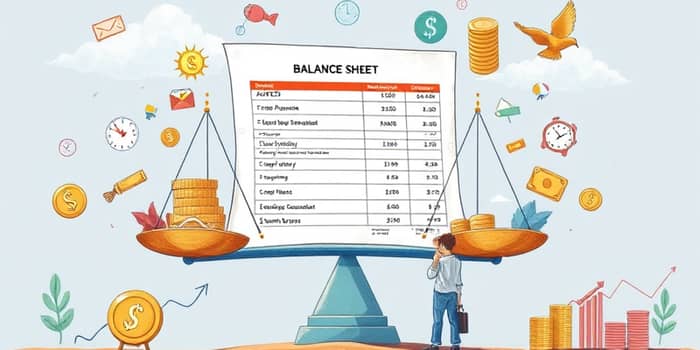
A balance sheet, also known as a statement of financial position, provides an organized snapshot of what you own and what you owe at a single moment in time. It breaks down into three main sections: assets, liabilities, and equity or net worth.
At its core, the equation is simple: total assets – total liabilities equals your net worth or equity. This fundamental relationship applies equally to individuals and corporations, ensuring consistency across personal and business finance.
Viewing your finances through this lens transforms numbers into actionable insight. Just as a doctor reads vital signs, you can interpret your balance sheet to see your financial condition right now and identify where to focus your efforts.
Components of a Balance Sheet
Whether you are mapping personal finances or running a business, the balance sheet follows the same structure. Let’s explore the key categories and how to value them accurately.
The current market value is the cornerstone of every item’s valuation, ensuring consistency and meaningful trend analysis over time.
Assets include everything you own, such as:
- Cash and cash equivalents: checking, savings, money market
- Investments: stocks, bonds, retirement accounts
- Real estate: primary residence, rentals, land
- Personal property: vehicles, jewelry, collectibles
- Other assets: business interests, royalties, intellectual property
Liabilities capture what you owe, divided into short-term and long-term debts. Always record the current outstanding balance for each obligation. Common examples include credit card balances, mortgages, auto loans, and student loans.
The difference between assets and liabilities defines your net worth or equity, highlighting whether your financial health is in positive or negative territory.
Creating Your Personal Balance Sheet: Step by Step
Building a personal balance sheet may seem daunting, but breaking it into clear steps makes it manageable and empowering.
- Pick a specific date for your snapshot, such as fiscal year-end or quarter-end.
- Gather financial documents: bank statements, investment reports, mortgage statements, and property valuations.
- List all assets, assigning each a current value and grouping into categories.
- List all liabilities with their outstanding balances, separating short-term from long-term debts.
- Calculate totals for assets and liabilities, then derive your net worth.
- Commit to regular updates—at least annual, but quarterly provides deeper insight.
This process turns scattered financial records into a coherent portrait of your wealth. It can be stored in a spreadsheet or personal finance software for ongoing tracking.
Interpreting the Balance Sheet as a Health Check
The true power of a balance sheet emerges when you review it over time. Regular comparisons reveal trends, strengths, and areas needing attention.
comprehensive trend analysis for net worth shows whether your net worth is growing, stagnating, or declining. If your net worth dips, you can drill down to see whether rising debts or shrinking assets are to blame.
Assessing liquidity answers the question: can you cover emergencies without selling long-term assets? A common guideline is to maintain six to twelve months of expenses in liquid form.
Debt and leverage risk become transparent. High-interest, unsecured debts like credit cards jump off the page, indicating immediate paydown priorities. Business owners can evaluate whether corporate liabilities threaten personal guarantees.
Turning Insight into Action
Armed with your balance sheet analysis, you can make informed financial decisions:
- Adjust your budget to accelerate savings or debt repayment.
- Rebalance investments to diversify and manage risk effectively.
- Plan for major milestones—buying a home, funding education, or starting a business.
By revisiting your balance sheet quarterly or annually, you reinforce positive habits, course-correct when needed, and maintain momentum toward your goals.
In essence, the balance sheet advantage is the ability to diagnose, plan, and grow. Just as periodic health check-ups keep your body in top shape, regular financial check-ins keep your wealth on track.
Start today by assembling your first balance sheet. Over time, this simple statement becomes a powerful tool for financial clarity, confidence, and long-term success.
References
- https://theprudentspeculator.com/blog/articles/create-a-personal-budget-and-balance-sheet-free-template/
- https://wr.cpa/2018/11/01/perfect-finances-personal-balance-sheet/
- https://www.forafinancial.com/blog/small-business/benefits-using-balance-sheet/
- https://www.moneymanagement.org/blog/how-to-create-a-personal-balance-sheet-and-determine-your-net-worth
- https://www.bbh.com/us/en/insights/capital-partners-insights/your-personal-balance-sheet-a-view-into-the-future.html
- https://study.com/learn/lesson/video/personal-balance-sheet.html
- https://auroratrainingadvantage.com/finance/key-term/personal-financial-statement/
- https://www.highradius.com/resources/Blog/guide-to-balance-sheet-with-examples/
- https://www.chase.com/business/knowledge-center/start/the-purpose-of-a-balance-sheet
- https://creativeplanning.com/insights/accounting/balance-sheet-financial-health-tax-planning/
- https://www.marinerwealthadvisors.com/insights/the-business-owners-personal-balance-sheet-what-to-track-beyond-net-worth/
- https://study.com/learn/lesson/personal-balance-sheet.html