
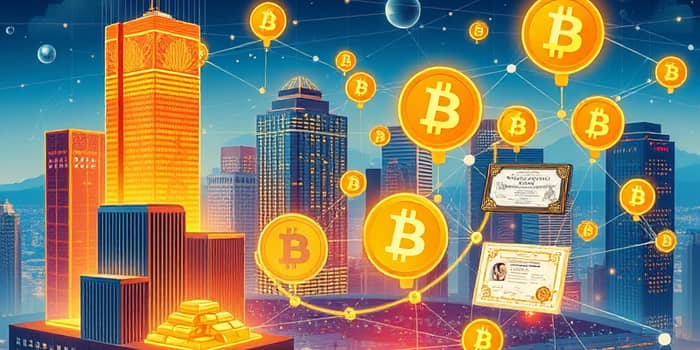
As the digital revolution reshapes every industry, a new frontier emerges: representing tangible and intangible assets as programmable digital tokens on blockchain networks. From iconic real estate developments to fine art masterpieces, tokenization is opening doors to investors and issuers worldwide.
By leveraging democratize investment opportunities and unlock value in previously inaccessible holdings, blockchain pioneers are transforming centuries-old financial models, enabling faster settlement, greater transparency, and broader participation.
Understanding the Fundamentals of Tokenization
Tokenization transforms tangible or intangible assets into programmable digital tokens recorded on distributed ledgers. These tokens can represent partial or full ownership, economic rights, or contractual claims linked to the underlying asset. By using programmable compliance via smart contracts, issuers automate interest distributions, enforce KYC/AML requirements, and execute corporate actions in a trustless environment. Whether fungible ERC-20 tokens represent shares in a real estate trust or non-fungible tokens certify a unique artwork, the core promise remains: transparent onchain asset management.
The end-to-end tokenization stack begins with the legal structure—an SPV or trust—and proceeds through custody, token issuance, compliance layers, trading venues, and data oracles. Each layer is critical to maintain transparency, security, and regulatory adherence. By layering on-chain processes over established financial frameworks, issuers can harness robust legal infrastructure and blockchain innovation simultaneously.
Market Growth and Opportunity
The market for tokenized real-world assets (RWAs) has grown from a niche experiment to a multi-billion dollar sector. As of early 2026, on-chain market value for actively traded tokenized assets stood at over $27.6 billion, while the total value represented through tokenized structures surged beyond $441 billion—a 31.6% increase in just one month. Institutional vehicles now dominate, with U.S. Treasuries, gold, and private credit leading the charge.
These figures reflect only the beginning. With less than 0.002% of the $867 trillion total addressable market on-chain, tremendous room remains for growth. Industry leaders predict real estate, debt instruments, and investment funds will drive mainstream adoption, while emerging categories like tokenized carbon credits and intellectual property may soon follow.
Key Drivers Transforming Finance
Blockchain rails offer streamlined capital mobilization on blockchain rails by reducing settlement times from days to minutes, cutting intermediary fees, and enabling global 24/7 access. Smart contracts ensure transparent record-keeping and programmable compliance, while fractionalization lowers entry barriers for retail investors. These benefits have attracted both fintech innovators and traditional asset managers.
Institutional endorsement is rising as major banks and asset managers launch token custody services and pilot tokenized funds. In parallel, policymakers craft frameworks recognizing digital securities as regulated instruments. The synergy of technological and regulatory progress creates fertile ground for mainstream adoption, encouraging capital allocators to deploy assets on-chain.
- Near-instant settlement, reducing counterparty risk
- Lower costs by eliminating intermediaries
- Broader access through fractional ownership
- Programmable features like automated distributions
Practical Guide to Entering the Tokenization Ecosystem
Organizations and individual investors can take concrete steps to participate. Start by identifying a suitable asset—real estate, private credit, or a commodity—and consult legal advisors to establish the necessary legal wrapper ensuring regulatory compliance. Partner with qualified custodians or trustees and select a blockchain platform for token issuance. Integrate oracles for real-time data and engage with secondary markets or DeFi protocols to enable liquidity.
- Assess the asset’s legal and regulatory requirements.
- Choose a custody provider and establish governance.
- Deploy smart contracts on a public or permissioned chain.
- Implement KYC/AML processes for investor onboarding.
- Connect with exchanges or OTC desks for liquidity.
Navigating Risks and Compliance
Despite its promise, tokenization faces challenges. Custody vulnerabilities and smart contract bugs can expose participants to risk. Jurisdictional uncertainties persist when regulations lag innovation. Conduct thorough smart contract audits, partner with regulated entities, and stay informed on policy shifts to mitigate these threats.
Investors should also consider market liquidity risks: while tokenization can unlock liquidity, secondary markets for certain asset classes may remain shallow initially. Adopting a phased approach—starting with pilot offerings—allows stakeholders to refine processes and build trust.
The Future: Democratization of Finance
As tokenized RWAs gain traction, envision a world where anyone can invest in landmark buildings, fine art collections, or sustainable infrastructure projects with a simple digital wallet. Fractional ownership fosters diverse portfolios and inclusive growth. Decentralized protocols could automate pension distributions, yield farming on tokenized bonds, or enable peer-to-peer lending backed by tokenized invoices.
This is your invitation to reimagine asset ownership. Whether you’re a business leader seeking innovative funding or an investor exploring new diversification avenues, tokenized real-world assets offer a groundbreaking path forward. Embrace this revolution and help shape a more inclusive, efficient, and transparent financial future.
References
- https://www.bdo.com/insights/industries/fintech/trends-in-tokenization-reimagining-real-world-assets
- https://katten.com/tokenization-of-real-world-assets-opportunities-challenges-and-the-path-ahead
- https://www.rwa.io/post/rwa-tokenization-trends-for-2026
- https://www.statista.com/statistics/1469146/tokenization-market-size-worldwide/
- https://en.wikipedia.org/wiki/Tokenized_real-world_asset
- https://www.fintechweekly.com/magazine/articles/real-world-asset-tokenization-explainer-institutional-2026
- https://www.chainalysis.com/blog/tokenized-real-world-assets-on-chain-commodities/
- https://arxiv.org/html/2503.01111v2
- https://www.youtube.com/watch?v=4NH2nOjVND0
- https://hadron.tether.to/en/blog/what-is-the-growth-potential-for-real-world-asset-tokenization
- https://app.rwa.xyz
- https://chain.link/education-hub/real-world-assets-rwas-explained
- https://tokeny.com/real-world-asset-rwa-tokenization-ecosystem-map/
- https://coinmarketcap.com/real-world-assets/