
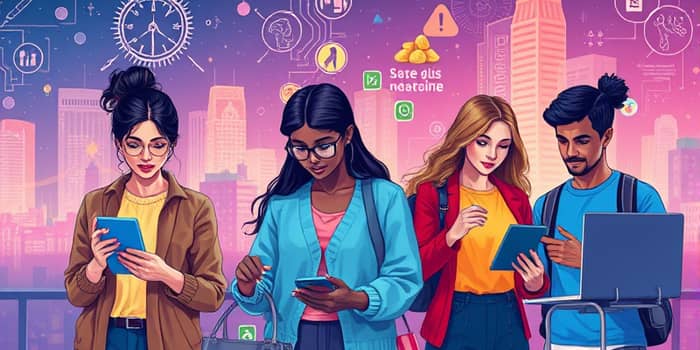
The consumer landscape in 2026 presents both challenges and unprecedented opportunities. Understanding evolving behaviors allows investors to align with market shifts and capitalize on emerging growth sectors.
The New Economic Landscape
Global ecommerce now accounts for a staggering 21.1% of total retail sales. Yet consumers have become fiercely value-conscious every single day, with daily online spending down to 9% from 21%. Weekly online purchases hover around 21%, highlighting a pronounced divide between essentials and non-essentials. Shoppers increasingly skip the mid-range, favoring either low-cost basics or premium experiences.
This bifurcation underscores the need for brands and investors to segment offerings effectively. Entry-level items must deliver reliable quality at unbeatable prices, while luxury and experiential goods require premium positioning and storytelling to resonate with affluent segments.
AI Adoption and Personalization
Artificial intelligence has transcended novelty status. Approximately 22% of shoppers leverage AI tools such as ChatGPT or in-app assistants to research purchases—30% of Millennials and 26% of Gen Z rely on these technologies versus just 5% of Boomers. Consumers cite time-saving and convenience as top benefits (32%), followed closely by personalization (31%).
AI-driven recommendations drive significant lift: 37% of buyers purchase more when content is tailored. Moreover, 25% to 37% of customers complete transactions based on AI suggestions when provided with transparent explanations. Brands integrating predictive analytics and machine learning in their customer journeys can tap into higher conversion rates and foster loyalty.
Social Commerce and Immersive Experiences
Social commerce is projected to account for 17% of online sales by 2026. In the United States alone, livestream shopping is a nearly $70 billion industry, blending entertainment and instant purchasing. Platforms like TikTok Shop demonstrated this potential with some sellers achieving $2 million in sales within 12 hours.
Meanwhile, the experiential economy thrives. Airbnb recorded 491 million nights booked, generating $82 billion in revenue. Consumers, especially Gen Z, are willing to cut spending by 13% but prioritize meaningful emotional and social experiences. Investors should consider travel, hospitality, and event-tech startups that innovate with flexible bookings and immersive formats.
Sustainability and Values-Driven Spending
Environmental and social values now influence over 40% of purchase decisions. Consumers are ready to pay more for brands that demonstrate genuine commitment to sustainability, transparency, and ethical practices. Wellness has emerged as a dominant theme, with private labels capturing market share through health-focused, budget-friendly options.
Brands that engage communities—through loyalty programs, cause marketing, or interactive social media campaigns—benefit from strong advocacy and repeat sales. Auditing supply chains for eco-friendly sourcing and reducing carbon footprints can unlock premium pricing and improve brand equity.
Generational Shifts: Gen Z and Millennials
Gen Z and Millennials drive the majority of digital spending. A key paradox emerges: Gen Z overall spending is down 13%, and holiday budgets have contracted by 23%, yet they demand more from every interaction. They embrace deal hunting—79% wait for sales, and 14% actively use discount codes.
Meanwhile, 72% of consumers are open to trying new brands, with figures rising to 80% for Millennials and 76% for Gen Z. Trust is earned through transparent communication and authentic engagement. These cohorts exhibit brand agnosticism but remain loyal when values align.
Investment Opportunities and Strategies
Identifying sectors poised for growth amid these trends is crucial. Consider the following high-potential areas:
- AI and Technology Enablers: Firms providing infrastructure, predictive analytics, and customer engagement platforms.
- Consumer Staples and Essentials: Value chains, private labels, and discount retailers benefiting from economic pressures.
- Social Commerce Platforms: Livestream shopping, in-app marketplaces, and interactive social networks.
- Experiences and Wellness: Travel-tech innovators, boutique hospitality, health-focused brands, and fitness–wellness apps.
- Sustainable and Ethical Brands: Companies with demonstrated ESG commitments and transparent supply chains.
Risk management must account for potential headwinds such as regulatory changes around AI, shifts in macroeconomic growth, and the volatility of consumer sentiment during economic downturns.
Case Studies: Social Commerce Success
TikTok Shop showcased the power of impulse-driven social platforms. Beauty entrepreneurs like P Louise turned viral moments into multi-million dollar launches within hours. Similarly, eco-friendly startups have leveraged social listening tools to identify trending sustainability topics, accelerating product development cycles and resonating with values-driven shoppers.
In travel, digital nomad-focused services offering flexible, subscription-based stays have seen bookings surge. These models prioritize community and adaptability, aligning with the expectations of younger travelers seeking adventure and connection.
Conclusion: Adapting for the Future
As consumer habits continue to evolve, investors and brands must remain agile. Embrace data-driven decision making, experiment boldly with emerging formats, and cultivate a deep understanding of generational preferences. Integrate AI not just for efficiency but for fostering genuine personalized connections. Prioritize sustainability and wellness to capture the values-first consumer base.
By aligning strategies with these core trends—economic bifurcation, AI adoption, social commerce, experiences over products, and values-driven engagement—stakeholders can navigate uncertainty and unlock transformative growth in the years ahead.
References
- https://www.salsify.com/blog/top-10-consumer-trends-to-watch
- https://mblm.com/blog/how-to-decode-changing-consumer-habits-before-your-competitors-do/
- https://www.intotheminds.com/blog/en/consumer-trends-2026/
- https://www.salsify.com/blog/how-consumer-buying-behavior-is-changing-in-2026
- https://escalent.co/blog/top-consumer-trends-2026-market-research-insights-brands-need-to-build-winning-strategies/
- https://www.statista.com/statistics/1425337/changes-in-purchase-habits-year-to-year/
- https://www.circana.com/post/unpacking-consumer-marketing-trends-that-will-drive-growth-in-2026
- https://www.mckinsey.com/industries/consumer-packaged-goods/our-insights/state-of-consumer
- https://www.rbccm.com/en/insights/2025/12/five-themes-reshaping-consumer-markets-in-2026
- https://www.pwc.com/us/en/industries/consumer-markets/library/gen-z-consumer-trends.html
- https://www.fidelity.com/learning-center/trading-investing/sector-outlook-2026
- https://nielseniq.com/global/en/info/consumer-behavior-change/
- https://www.harriswilliams.com/our-insights/cons-2026-industry-outlook-m&a-trends-consumer
- https://www.deloitte.com/us/en/insights/industry/retail-distribution/consumer-behavior-trends-state-of-the-consumer-tracker.html
- https://www.library.hbs.edu/working-knowledge/eight-trends-for-2026-pricing-passion-and-the-risks-ahead