
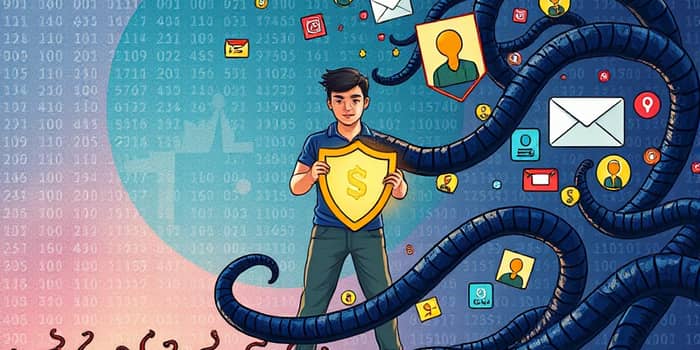
Every day, millions of people around the world log in, click links, and make transactions—often unaware of the hidden dangers lurking online. Scammers exploit our trust, preying on emotions, urgency, and unfamiliar platforms. This article empowers you with knowledge, practical steps, and a resilient mindset to protect yourself from deception.
Understanding the Scope of the Problem
In today’s hyperconnected world, online scams and attacks are extremely widespread. According to the Pew Research Center, 73% of U.S. adults have experienced at least one type of online scam or attack, and 32% encountered fraud in the past year alone.
Financial losses are staggering. The Consumer Federation of America estimates Americans lose an adjusted $119 billion each year to online scams. In 2024, victims reported $16.6 billion in losses to the FBI’s Internet Crime Complaint Center—a 33% rise over the previous year.
Major Types of Scams and Their Tactics
Scammers continuously evolve. Understanding their methods is key to staying safe.
- Phishing and smishing attacks masquerade as legitimate emails or texts, prompting you to click on links or share credentials.
- Tech support scams display fake virus warnings, urging victims to give remote access or pay for nonexistent services.
- Investment fraud promises high returns with little risk, often through counterfeit trading platforms or Ponzi schemes.
Spotting Red Flags and Warning Signs
Every scam carries telltale clues. By learning to identify them, you can stop fraudsters in their tracks.
- Urgency and threats: Demands for immediate payment or account suspension notices.
- Unsolicited contact: Unexpected calls, emails, or messages from unfamiliar sources.
- Too-good-to-be-true offers: Promises of guaranteed profits or exclusive discounts.
Government impersonation scams often claim to be the IRS, Social Security, or police. They threaten arrest or asset seizure unless you pay instantly. Never respond to unsolicited messages; always verify through official channels.
Practical Prevention Strategies
Adopting proactive habits is your strongest defense. Simple measures can block the majority of scam attempts.
- Enable multi-factor authentication (MFA) on all important accounts.
- Keep devices and software up to date to patch security vulnerabilities.
- Use strong, unique passwords and consider a reputable password manager.
Before clicking any link, hover to preview the URL. Look for typosquatting—domains like “bank-secure.com” instead of the real site. Verify before you trust every request for personal or financial information.
Types of Scams and Estimated Annual Losses
What to Do If You’re Targeted
If you suspect fraud, act swiftly:
- Stop all communication with the suspected scammer.
- Change passwords and secure your accounts immediately.
- Report the incident to your bank, credit-card company, and the FTC or local authorities.
Document every detail: screenshot messages, record call times, and note names or badge numbers. This evidence amplifies your chances of recovery and helps authorities track down criminals.
Building a Scam-Resistant Mindset
Beyond tools and tactics, your attitude shapes your security. Cultivate healthy skepticism without slipping into paranoia.
Ask yourself before every click: “Does this request make sense? Have I verified the source?” Over time, these moments of reflection become second nature. Share your knowledge with family and friends, especially older adults who face higher losses—seniors reported $3.4 billion in annual losses in 2023 alone.
A community that communicates openly about scams becomes a safer one. By teaching loved ones to recognize tech support fraud pop-ups or phishing emails, you multiply your protective network.
Conclusion: Your Ongoing Vigilance
No single strategy can eliminate all risk, but with informed habits and a proactive mindset, you can reduce your exposure dramatically. Remember that every scam you thwart is a victory—for you, your family, and the broader community.
Your defense against deception begins with awareness. Stay curious, stay vigilant, and never stop learning. Together, we can turn the tide against fraudsters and reclaim the digital world on our own terms.
References
- https://consumer.ftc.gov/articles/how-avoid-scam
- https://consumerfed.org/press_release/americans-estimated-to-lose-119-billion-annually-to-online-scams/
- https://www.aarp.org/money/scams-fraud/protecting-yourself-from-criminals/
- https://www.pewresearch.org/internet/2025/07/31/online-scams-and-attacks-in-america-today/
- https://fedpaymentsimprovement.org/resources/scams-mitigation-toolkit/toolkit-module-3-scam-prevention-and-detection/
- https://www.statista.com/topics/11020/online-fraud-in-the-united-states/
- https://antifraudcentre-centreantifraude.ca/protect-protegez-eng.htm
- https://www.ftc.gov/news-events/news/press-releases/2025/08/ftc-data-show-more-four-fold-increase-reports-impersonation-scammers-stealing-tens-even-hundreds
- https://www.fdic.gov/consumer-resource-center/2021-10/avoiding-scams-and-scammers
- https://www.occ.gov/topics/consumers-and-communities/consumer-protection/fraud-resources/online-and-digital-scams.html
- https://www.consumerfinance.gov/consumer-tools/fraud/
- https://www.scamwatch.gov.au/research-and-resources/scam-statistics
- https://www.stimson.org/2025/countering-digital-deception-national-responses-to-online-scams/
- https://usa.kaspersky.com/resource-center/threats/top-scams-how-to-avoid-becoming-a-victim
- https://www.youtube.com/watch?v=SW7qt2S-ixQ