
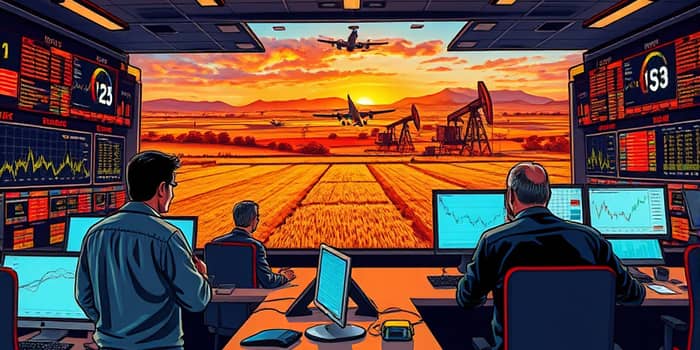
Futures contracts serve as the beating heart of modern financial markets, enabling participants to manage price risk, secure costs, and pursue profit opportunities across a vast array of asset classes. Originating centuries ago to help farmers stabilize crop prices, these instruments have evolved into sophisticated agreements traded on centralized exchanges, covering everything from agricultural commodities and energy products to equity indices, currencies, and interest rate derivatives. By locking in a price today for delivery months ahead, market participants can hedge against adverse price swings or embrace speculative strategies that capitalize on short-term volatility. Understanding how futures function at a granular level is vital for anyone seeking to harness their potential responsibly.
Core Definition of Futures Contracts
At its core, a futures contract is a standardized agreements to buy or sell a specified quantity of an underlying asset at a predetermined price on a set date in the future. This predetermined price on a future date anchors expectations and allows parties to transfer or assume price risk with clarity. Contracts are traded on centralized exchanges, each with fixed terms such as quantity, quality, delivery location, and expiration date, ensuring that every trade meets uniform standards. While many agreements culminate in cash settlement or position offset before delivery, the promise of physical delivery remains a structural safeguard against excessive speculation.
Pricing of these contracts reflects the spot value of the underlying asset plus factors like supply and demand imbalances, interest rates, storage or carrying costs, and anticipated dividends or yield. Exchange guarantees eliminate counterparty risk, since clearinghouses step in as the buyer to every seller and the seller to every buyer, ensuring performance even in turbulent markets.
Key Mechanics and Terminology
Every futures contract is defined by a precise set of specifications and governed by margin requirements that underpin the leverage effect. Traders must know this terminology to navigate the markets effectively.
- detailed contract specifications including tick size: Grade, quantity of the asset, unit pricing, minimum price fluctuation or tick size, tick value, expiration date, and delivery terms.
- long and short positions for directional bets: Long position commits to buying if prices rise; short position locks in revenue if prices fall.
- leverage and margin requirements amplifying results: Only a small fraction of the contract’s full value is required. The initial margin acts as performance bond, magnifying both gains and losses.
- open interest and trading volume metrics: Indicate the number of outstanding contracts and trading activity, key for assessing liquidity.
- support and resistance price levels: Technical levels serving as price floors or ceilings for entries and exits.
For example, a Micro E-mini S&P 500 contract has a notional value based on 5,000 index points multiplied by $5 per point, but might require only 3–12% of that value as margin. A 50-point move at $5 per point delivers a $250 profit or loss, showcasing how small price fluctuations translate into meaningful gains across leveraged instruments.
Hedging: Risk Management Strategy
Hedgers use futures to shield their core business from unpredictable price movements. Producers, consumers, and corporations take positions opposite to their cash market exposure to lock in costs or revenues, prioritizing stability over spectacular returns.
For instance, a wheat farmer projecting a harvest of 10,000 bushels in six months might sell wheat futures today. If spot prices decline at harvest, losses in the cash market are offset by gains on the futures position, effectively locking in price certainty. Conversely, a flour miller anticipating a purchase of wheat may buy futures to avoid paying a higher price later, ensuring cost predictability.
Major corporations also employ hedging strategies at scale. In 2022, European airlines collectively realized approximately €5 billion in mark-to-market gains by hedging fuel costs ahead of an oil price surge triggered by geopolitical tensions. This strategic risk management protected operations, illustrating how large institutions leverage futures to safeguard operations and financial plans.
Speculation: Profit from Price Movements
Speculators, unlike hedgers, have no underlying cash market exposure. Their objective is to profit from directional price changes, often employing leverage to amplify returns. High risk tolerance and a disciplined approach to margin management are prerequisites, as losses can exceed the initial outlay if positions move unfavorably.
Typical speculative strategies include:
- long positions for rising price bets: Purchasing futures to benefit from an expected price rise, then selling at a higher level for profit.
- short positions for profits on falls: Selling futures anticipating a price decline, then buying back at a lower price to realize gains.
Real-world speculators range from individual traders to hedge funds. A crude oil trader might buy futures before a political event, hoping for supply disruptions to push prices upward. Conversely, an equity speculator might short S&P 500 futures ahead of an anticipated market correction, seeking to profit from a downturn. These activities inject liquidity and support tight bid-ask spreads, making it easier for hedgers to execute their risk transfers efficiently.
Hedging vs. Speculation: Direct Comparison
Market Functions and Broader Context
The interplay between hedgers and speculators underpins the liquidity, efficiency, and transparency of futures markets. Speculative activity often leads to tighter bid-ask spreads, allowing hedgers to enter or exit positions with minimal slippage. Meanwhile, hedging flows contribute to robust price discovery, as futures prices incorporate expectations about supply, demand, and macroeconomic variables in real time.
Across asset classes—from agricultural commodities like wheat and cocoa to energy products such as crude oil and natural gas, as well as financial instruments like equity indices, interest rate futures, and currency contracts—futures have become essential risk management and investment tools. Traders can set stop-loss orders or predefined profit targets to manage exposures, while clearinghouses and regulatory oversight by bodies such as the CFTC maintain market integrity and protect participants from default risk.
Conclusion
Futures contracts represent a versatile and powerful mechanism for both hedging real-world exposures and pursuing speculative opportunities. By understanding key mechanics—such as contract specifications, margin requirements, and market roles—participants can deploy strategies that align with their risk tolerance and objectives. Whether you are a farmer seeking to stabilize revenue, a corporate treasurer managing commodity costs, or a trader aiming to capitalize on price trends, mastering futures markets offers a pathway to greater financial control and potential profitability.
Embrace the discipline of risk management, stay informed about macroeconomic indicators, and respect the leverage that amplifies outcomes. With a balanced approach, futures contracts can be harnessed to create value, protect against uncertainty, and participate in the vibrant ebb and flow of global markets.
References
- https://www.cannontrading.com/tools/support-resistance-levels/hedging-with-futures/
- https://www.topstep.com/blog/futures-trading-terminology-explained/
- https://highstrike.com/hedging-vs-speculation/
- https://www.cftc.gov/LearnAndProtect/AdvisoriesAndArticles/FuturesMarketBasics/index.htm
- https://ninjatrader.com/futures/futures-trading-basics/
- https://support.kraken.com/articles/speculative-vs-hedging
- https://www.schwab.com/learn/story/basics-trading-futures-contracts
- https://futures.stonex.com/blog/the-differences-between-hedgers-and-speculators-in-futures-markets
- https://studentjournals.anu.edu.au/plugins/generic/pdfJsViewer/pdf.js/web/viewer.html?file=%2Findex.php%2Findex%2Flogin%2FsignOut%3Fsource%3D.1pic.site&io0=6211825218624
- https://www.youtube.com/watch?v=EfBA1oPkeV8
- https://www.ig.com/en/futures-trading/what-are-futures-how-do-you-trade-them
- https://www.gffbrokers.com/speculators-vs-hedgers-a-simple-guide/
- https://www.youtube.com/watch?v=Dh5KFZqEHqU