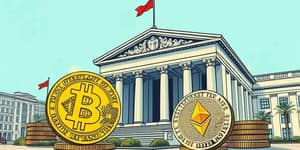

Designing token economies that endure volatility and reward participants over the long haul is both an art and a science. In this article, we explore proven principles, practical mechanisms, and inspiring examples that will help you craft a self-sustaining digital economy.
Why Sustainable Token Economies Matter
Blockchain projects often face the risk of rapid inflation, misaligned incentives, or collapse under speculative pressure. A balanced ecosystem of rewards and controls ensures that tokens maintain value and utility over time. By prioritizing sustainable design, teams can foster strong, resilient communities and guard against boom-bust cycles that erode trust.
When tokens are designed thoughtfully, they become more than just speculative assets. They serve as collaborative tools for governance, participation, and value transfer. A sustainable token model aligns every stakeholder—from developers to end users—with the long-term health of the project.
Moreover, well-crafted tokenomics can drive network effects, attracting developers, investors, and users by demonstrating a clear path to growth. This virtuous cycle of engagement is the foundation for any thriving decentralized ecosystem.
Key Principles of Sustainable Design
- Align Incentives with Long-Term Value: Craft rewards that encourage durable contributions, such as staking, liquidity provision, or content creation.
- Simplicity and Clarity: Use transparent models that users can understand in minutes, reducing friction and boosting adoption.
- Real Demand and Utility: Ensure tokens serve practical use cases that drive network activity, not just speculation.
- Scarcity and Inflation Control: Employ deflationary burns, adjustable minting, or capped supplies to manage supply-side pressures.
- Robust Governance Structures: Implement transparent, inclusive voting models to prevent centralization and promote accountability.
- Value Creation and Capture: Design tokens to capture revenue through fees, access rights, or revenue-sharing mechanisms.
- Community Involvement: Offer exclusive insights, early access, or testing rewards to align development with user needs.
- ESG and Sustainability: Favor proof-of-stake or energy-efficient consensus, and integrate eco-friendly analytics for rewards.
- Market Cycle Preparedness: Build adaptable mechanisms to navigate volatility and shifting investor sentiment.
Grounding your token economy in these principles sets a clear direction for every design decision, reducing risk and enhancing stakeholder confidence.
Design Strategies and Mechanisms
Turning principles into practice requires a suite of mechanisms that work in concert. Start with a clear plan for token supply and allocation:
Create an initial distribution that rewards contributors, reserves tokens for future growth, and avoids large early dumps. Integrate vesting schedules for teams and investors to foster long-term commitment and gradual release.
Dynamic incentives can adapt rewards based on real-time metrics. For example, tie token emissions to network usage or node performance. This approach prevents over-inflation and aligns supply with genuine demand.
Liquidity management is equally critical. Protocol-owned pools and bonding mechanisms encourage long-term capital without relying solely on external liquidity providers. This guards against mercenary capital outflows during market downturns.
Multi-token architectures separate governance from utility functions. By issuing a governance token for decision-making and a utility token for transactions, projects can prevent token capture and maintain role clarity. This structure also allows targeted policy changes without disrupting core economic flows.
Continuous adaptability is vital. Incorporating feedback loops, AI-driven analytics, and cross-chain interoperability ensures that your token model can evolve as user needs and market conditions change. A proactive stance on data-informed adjustments keeps the economy balanced and fair.
These mechanisms are not isolated tools but integral pieces of a cohesive design. Each reinforces the others to create a resilient economic framework.
Real-World Examples
Several leading projects showcase the power of sustainable token design:
- Ethereum: Fuels a vast ecosystem with clear utility, gradual upgrades, and broad developer adoption.
- Binance Coin (BNB): Conducts regular token burns to reduce total supply and reward long-term holders.
- Uniswap: Shares protocol fees with liquidity providers and enables community governance via UNI tokens.
- Optimism & NEAR Protocol: Allocate dynamic incentives to stakers and dApp developers, adapting to usage patterns.
- Arbitrum: Features transparent vesting and community-driven governance milestones.
- Olympus DAO: Uses bonding to build protocol-owned liquidity, strengthening treasury reserves.
- GMX: Distributes a portion of real trading revenue as rewards, creating durable token demand.
- Ratio1: Scales emissions in direct proportion to network infrastructure growth and token utility.
Each example illustrates how combining clear token roles with measured issuance can yield thriving, self-sustaining networks. Analyze these models to adapt best practices for your own project.
Avoiding Common Pitfalls
- Unsustainable liquidity mining or Ponzinomics that prioritize hype over fundamentals.
- Excessive token emissions leading to high inflation and rapid devaluation.
- Centralized control that undermines community trust and engagement.
- Speculation-driven demand without real utility to anchor token value.
- Overly complex economic models that confuse users and stall adoption.
Avoid these pitfalls by testing models with simulations, gathering community feedback early, and keeping economic parameters transparent. Trust is built over time through consistency and clear communication.
The Future of Tokenomics
The landscape of token design continues to evolve with groundbreaking innovations. AI-powered optimization enables real-time adjustments to emission rates, burn schedules, and governance thresholds, maintaining equilibrium under varying conditions.
Cross-chain ecosystems are unlocking new liquidity channels, allowing tokens to seamlessly move between networks. This interoperability expands use cases and strengthens overall demand.
Governance is also maturing. Novel frameworks like quadratic voting, reputation-based representation, and conviction voting introduce more nuanced decision-making that balances majority rule with minority protection.
Environmental considerations remain central. Projects adopting proof-of-stake or integrating carbon-offset mechanisms will lead the charge in appealing to eco-conscious communities. Transparent reporting of energy use and sustainability efforts becomes a competitive advantage.
Regulatory clarity is on the horizon. By proactively engaging with compliance requirements and embedding transparency into token models, projects can mitigate legal risks and foster long-term institutional interest. Tools for pre-launch stress testing and scenario simulation empower teams to refine tokenomics before live deployment, reducing costly post-launch adjustments.
Conclusion
Building a sustainable token economy is a multifaceted endeavor that blends strategic foresight with adaptive mechanisms. By adhering to core principles—long-term incentives, simplicity, real utility, scarcity controls, transparent governance, and community alignment—projects can create resilient ecosystems that stand the test of time.
Embrace the journey of continuous improvement. Leverage data, solicit feedback, and remain open to evolving your model as conditions change. With dedication and a commitment to responsible innovation, you can unlock the full potential of token-driven networks and inspire a new era of collaborative value creation.
References
- https://luma.com/d8n37qj0
- https://coinbound.io/tokenomics-design-best-practices-for-sustainable-models/
- https://kensoninvestments.com/building-sustainable-token-economies-principles-and-best-practices/
- https://quecko.com/tokenomics-design-in-2025-building-sustainable-crypto-economies
- https://tde.fi/founder-resource/blogs/tokenomics/how-to-build-a-sustainable-token-model-a-comprehensive-guide/
- https://spiritcapital.com/blog/token-economy-design
- https://recursivealpha.com/insights/building-token-economics
- https://arxiv.org/pdf/2602.09608
- https://ratio1.ai/blog/building-sustainable-token-economics-through-adoption-aware-mining