
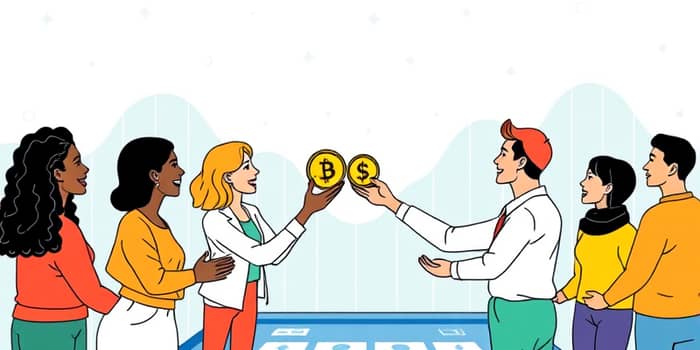
Peer-to-peer lending has transformed the way individuals and businesses access credit and investors generate yield. By bypassing traditional banks, P2P platforms create an efficient online marketplace that benefits both sides.
In this comprehensive guide, we explore the evolution, market dynamics, investor benefits, risks, and practical steps to get started in alternative lending.
Understanding Peer-to-Peer Lending
Peer-to-peer (P2P) lending, also known as marketplace lending via online platforms, connects borrowers who need financing with investors seeking attractive returns. Emerging after the 2008 financial crisis, P2P lending addresses tightened bank credit by enabling individuals and institutions to fund small-balance unsecured loans.
Borrowers apply through user-friendly websites, receive credit ratings, and post loan listings. Investors then browse opportunities and fund portions of loans, often in small increments, diversifying risk. Platforms handle underwriting, payments, and servicing, ensuring a streamlined, transparent experience.
Market Growth and Future Projections
The global P2P lending market has seen explosive growth, driven by fintech innovation, increased internet penetration, and underserved credit demand. Despite varying estimates, recent authoritative sources project sustained expansion.
Key drivers include digital banking transformation, small business financing needs, and cross-border lending. Future trends point to increased regulatory oversight, decentralized lending solutions, and enhanced risk management tools powered by blockchain.
Why Investors Are Drawn to P2P Loans
- Higher yields than traditional savings accounts, often ranging between 5% and 12% APR.
- Diversification across consumer and business loans to spread risk across multiple sectors.
- Low minimum investments allow small commitments, letting investors start with as little as $25 per loan.
- Periodic repayments with principal and interest provide steady cash flow.
Risks to Consider Before Investing
- Default risk on loans, especially for borrowers with lower credit scores, can lead to principal losses.
- Illiquidity, as funds are tied up until loans mature and secondary markets are limited.
- Platform risk, including changes in regulation and operational failures of lending sites.
- Interest rates reflect borrower risk, meaning higher rates can accompany greater chance of default.
Comparing P2P Lending with Traditional Options
Compared to bank savings accounts or certificates of deposit (CDs), P2P lending offers significantly higher returns but carries more risk. Unlike bonds or stock dividends, P2P loans are unsecured debt instruments without government insurance.
Traditional banks impose strict credit requirements and lengthy approval processes, while P2P platforms deliver fast funding in as little as two days and accommodate borrowers with credit scores below 600. Investors must weigh the extra yield against potential losses and limited liquidity.
How to Begin Your P2P Investment Journey
- Research reputable platforms: Compare fees, historical performance, and borrower profiles.
- Diversify across loan grades: Allocate small amounts to high- and low-risk loans alike.
- Set a budget: Decide on a monthly allocation and stick to it to manage exposure.
- Monitor performance: Review repayment schedules and reinvest proceeds for compound growth.
- Understand tax implications: Interest income is generally taxed as ordinary income.
Regulatory Landscape and the Road Ahead
As P2P lending matures, regulators worldwide are establishing frameworks to protect investors and borrowers. In the United States, state securities laws and federal guidelines govern platform operations and investor eligibility.
Emerging technologies like smart contracts and cutting-edge blockchain for enhanced transparency promise to automate underwriting and repayment, reducing costs and fraud. Cross-border platforms are also expanding access, enabling global participation and fostering financial inclusion.
Conclusion: Embracing the Future of Finance
P2P lending represents a paradigm shift in finance, offering both investors and borrowers an alternative to traditional banking. With transparent fee structures and flexible payment options, these platforms empower individuals and small businesses alike.
By understanding the benefits and risks, conducting due diligence, and leveraging technology, you can position yourself to capture the growth potential of this dynamic market. As regulation and innovation continue to evolve, peer-to-peer lending remains a compelling opportunity for those seeking to write the next chapter in their financial journey.
References
- https://www.eatonvance.com/insights/articles/an-introduction-to-alternative-lending.html
- https://www.precedenceresearch.com/press-release/peer-to-peer-lending-market
- https://www.onemainfinancial.com/resources/loan-basics/what-is-peer-to-peer-lending
- https://www.thebusinessresearchcompany.com/report/peer-to-peer-p2p-lending-global-market-report
- https://www.nerdwallet.com/personal-loans/learn/peer-to-peer-loans
- https://www.researchandmarkets.com/reports/5766977/peer-to-peer-p2p-lending-market-report
- https://www.openpr.com/news/4448109/united-states-peer-to-peer-p2p-lending-market-2026-growth
- https://www.britannica.com/money/what-is-peer-to-peer-lending
- https://www.imarcgroup.com/global-peer-to-peer-lending-market
- https://www.northstarplanners.com/new-blog/peer-to-peer-lending-what-you-should-know-before-you-participate
- https://www.custommarketinsights.com/report/p2p-lending-market/
- https://www.businessresearchinsights.com/market-reports/debt-based-p2p-crowdfunding-market-104948
- https://www.youtube.com/watch?v=NvZhFkxNWTk